It’s Corona Time

What we are living through in this current climate is truly historic. COVID-19 has truly hit the world like no one could ever imagine. To record developing motions in this time, I aim to create a segment in which I will keep updated on the latest facts and research directions in regards to the corona virus. It has caused so much disruptions to everyones daily working lives, the whole world is experiencing hysteria and fear simultaneously. As I am UK based I will keep a focus on COVID-19 escalations in Britain however I will investigate into research developments occurring in labs world wide. It is important in this period of time we remain calm and truthful, there is an overwhelming amount of fake news aiming to fuel the hysteria of COVID-19 however I am here to keep you updated on the hard scientific facts. Stay tuned!

In the meantime please stay updated and only trust information from trusted sources such as WHO and government websites.

https://www.who.int/emergencies/diseases/novel-coronavirus-2019

https://www.nhs.uk/conditions/coronavirus-covid-19/

https://www.gov.uk/guidance/coronavirus-covid-19-information-for-the-public

How Bariatric Surgery Affects PCOS Patients and Their Fertility

What is PCOS?

Polycystic ovary syndrome (PCOS) is an endocrine disorder which features amenorrhea, hyperandrogenaemia, and enlarged ovaries with multiple cysts (Sirmans & Pate, 2013). PCOS has shown to be present in over 10% of women of childbearing age and in severe cases causing infertility (March et al, 2010). More than 50% of women with PCOS are obese (Butterworth, Deguara & Borg, 2016). To improve quality of life for these women many lifestyle altercations are required however this only works to an extent (Harris-Glocker et al, 2010). For women with a body mass index (BMI) of over 40kg/m2 or a BMI of over 35kg/mwith an obesity related condition which would be improved with weight loss (such as diabetes type 2 or high blood pressure), bariatric surgery is a solution (nhs.uk, 2017). Pathophysiology mechanisms of PCOS in relation to amenorrhea (the absence of menstruation) will be considered along with current drug interventions. How bariatric surgery affects the fertility of PCOS patients will also be discussed in further depth.

How PCOS leads to amenorrhea  

PCOS patients who are obese exhibit impaired ovulation and decreased pregnancy rates relative to PCOS patients at healthy BMI’s (Tziomalos and Dinas, 2018). The basic lesion of PCOS is an endocrinological disturbance within the ovary, which has been associated with excess androgens and other extra-ovarian hormonal abnormalities such as hyperinsulinemia, hirsutism and increased LH:FSH ratio (Palomba, 2018) as seen in figure 1. However individually these endocrinological associations with PCOS do not explain the pathogenesis, suggesting there are wider causes and contributions to the mechanism pathway (Palomba, 2018). 

The pathophysiology of PCOS is not yet fully understood however Rotstein (2013) proposes that hyperandrogenaemia is causing an arrest in antral follicle development, which leads to anovulation and so there is no corpus luteum, resulting in subfertility or amenorrhea (Rotstein, 2013) (figure 1). A more recent study by Butterworth, Deguara & Borg (2016) suggests that insulin resistance and hyperinsulinemia are the key pathophysiological mechanisms (Butterworth, Deguara & Borg, 2016). Although the complex interaction between environment, genetics and lifestyle have heavy impacts on fertility, the exact aetiology is still unknown (Butterworth, Deguara & Borg, 2016). Intrauterine androgen exposure is in question as a contributing factor of anovulation, as Dumesic et al (2018) has shown that pregnant women with PCOS have elevated testosterone, but it is not yet clear if the foetus is exposed to the increased androgen levels (Dumesic et al, 2018). A study investigating the aromatase activity of the placenta would provide insight and potentially confirm if intrauterine androgen exposure directly contribute to anovulation of PCOS patients (Palomba, 2018). If this mechanism is more understood then a suitable intervention may be able to prevent foetal androgen exposure. 

To combat subfertility, the first-line drug therapy used to induce ovulation is oral anti-oestrogen clomiphene citrate (CC) or letrozole (Balen et al, 2016). CC works by blocking hypothalamic and pituitary oestrogen receptors, it also induces a discharge of FSH which triggers regular ovulation (Homburg and Filippou, 2016). Insulin resistance is a common feature of PCOS, there has shown to be a correlation between insulin resistance and CC resistance (Kar, 2012). In such cases of insulin resistant PCOS patients, letrozole was a suitable alternative (Kar, 2012). Letrozole is an aromatase inhibitor which acts by reducing oestrogen production by blocking androgens which would balance the androgen levels, preventing the subfertility (Kar, 2012). As figure 1 portrays, metformin is also a common drug used to reduce hyperinsulinemia and ameliorate hyperandrogenism in obese and non-obese patients (Sam and Ehrmann, 2017). For PCOS patients with insulin resistance, studies reveal that metformin has been successful in inducing regular ovulatory cycles and efficient weight loss (Sam and Ehrmann, 2017). Although not all PCOS patients display insulin resistance therefore metformin drug is specific to PCOS patients with insulin resistance.  

CC, letrozole and metformin are effective treatments to induce ovulation however drugs are metabolised differently in patients therefore its effectiveness will vary (Roque et al, 2015). Lifestyle modification remains to be the best first step treatment for amenorrhoeic PCOS patients before resorting to pharmacological ovulation induction (Hashim, 2016). For patients who find lifestyle changes to be ineffective and do not benefit from drug therapy may then consider bariatric surgery.

Reproductive considerations for bariatric surgery 

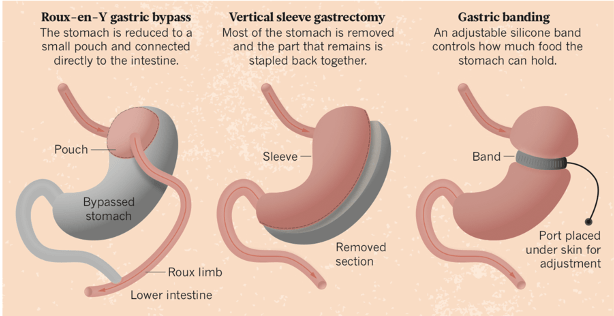
Infertility has shown to be a key reason for PCOS patients seeking bariatric surgery (Christ and Falcone, 2018). PCOS patients were found more proactive in seeking treatment for infertility when compared to amenorrhoeic women without PCOS (Hashim, 2016). Bariatric surgery is a successful management strategy for morbid obesity, however there are limited studies on its effect on patients who exhibit PCOS (Skubleny et al, 2016). PCOS patients are already predisposed to glucose abnormalities and ultimately type 2 diabetes, dyslipidaemia and eventually cardiovascular disease. (Malik and Traub, 2012). Bariatric surgery can be a powerful tool to prevent these fatal consequences and also possibly ameliorate PCOS features (Malik and Traub, 2012). There are three types of bariatric surgery procedures which are most commonly performed (figure 2). These include; Laparospic roux-en-Y Gastric Bypass (LRYGB), Laparospic sleeve gastrectomy (LSG) and Laparospic adjustable gastric banding (LAGB) (Malik and Traub, 2012). 

LRYGB has shown to be most effective especially in cases of diabetic patients, where weight loss and glucose control was successful even after a five year follow up (Dicker et al, 2016), however fertility of these patients were not considered in this paper. Jamal et al (2012) highlighted 10 participants who exhibited PCOS and infertility, after a LRYGB procedure the outcomes resulted in menstrual irregularities corrected with a regular cycle of 82% of patients without the need of hormonal treatment or in vitro fertilisation (IVF) (Jamal et al, 2012). Also 60% of their patients had achieved a successful pregnancy within three years postoperative without any pregnancy induced or postpartum complications (Jamal et al, 2012). Malik and Traub (2012) identified in their study a 68% success rate for LRYGB procedures after a 4 year follow up, though this was with limited data and a small sample size (Malik and Traub, 2012). Doblado et al (2010) highlighted a PCOS patient aged 29, LAGB enabled the patient to achieve a successful pregnancy using in vitro fertilisation (IVF). Hughes (2014) described that LAGB has shown to be the least effective as after a three year follow up, patients often lost an average of only 16% of thei­­r weight whereas LRYGB enabled a 32% average weight loss (Hughes, 2014). LSG is the newest procedure and so there is limited published results, though results do indicate a higher success rate over LAGB (Malik and Traub, 2012). George and Azeez (2013) found success with LSG where results showed the procedure resolved menstrual dysfunction in 100% of PCOS patients and hirsutism and radiological evidence of PCOS was resolved in 80% of patients (George and Azeez, 2013). Although, George and Azeez (2013) did not have a follow up record therefore it is difficult to determine the long term results from this experiment. 

A recent meta-analysis study conducted by Skubleny et al (2016) identified a sample of 2130 obese female patients. 45.6% of these patients exhibited PCOS however after bariatric surgery (mainly LRYGB) there was a significant decrease of PCOS to only 6.8% postoperatively at a one year follow up (Skubleny et al, 2016). Long term data is still limited to confirm if the decreased PCOS symptoms would remain permanently attenuated (Skubleny et al, 2016). The evidence for improvement in fertility after bariatric surgery is still limited but trends do indicate high success rates.

Hopes for the future 

The exact relationship between PCOS and amenorrhea remains unknown however strong indications are that hyperandrogenaemia and hyperinsulinemia are key pathophysiology mechanisms (Butterworth, Deguara & Borg, 2016). Lifestyle altercations and drug therapies are effective treatments, however they only work to an extent for some patients (Roque et al, 2015). Several studies indicate that bariatric surgery improves diagnostic features of PCOS in patients (Christ and Falcone, 2018). Though limitations in these studies are substantial, as there are many criteria of infertility which were not mentioned. Infertility is multifactorial where PCOS is a frequent cause (Butterworth, Deguara & Borg, 2016), however almost none of the studies mentioned patient age nor lifestyle choices such as smoking and alcohol intake which all affect fertility. As most studies show amelioration of PCOS postoperatively, the current criteria for bariatric surgery remains to require a BMI of over 35kg/mwith a condition such as diabetes or hypertension. Infertility should also be considered as a condition for bariatric surgery as there are clear increases in pregnancies postoperatively (Malik and Traud, 2012). A more detailed study on PCOS patients who experience infertility, and an analysis on their age, environmental impacts and genetics would provide further insight into the ambiguity of how bariatric surgery affects fertility of PCOS patients. 

References 

Balen, A.H., Morley, L.C., Misso, M., Franks, S., Legro, R.S., Wijeyaratne, C.N., Stener-Victorin, E., Fauser, B.C., Norman, R.J. and Teede, H. (2016). The management of anovulatory infertility in women with polycystic ovary syndrome: an analysis of the evidence to support the development of global WHO guidance. Human reproduction update, 22(6), pp.687-708.

Butterworth, J., Deguara, J. and Borg, C. (2016). Bariatric surgery, polycystic ovary syndrome, and infertility. Journal of obesity2016.

Christ, J. and Falcone, T. (2018). Bariatric Surgery Improves Hyperandrogenism, Menstrual Irregularities, and Metabolic Dysfunction Among Women with Polycystic Ovary Syndrome (PCOS). Obesity surgery, pp.1-7.

Dicker, D., Yahalom, R., Comaneshter, D.S. and Vinker, S. (2016). Long-term outcomes of three types of bariatric surgery on obesity and type 2 diabetes control and remission. Obesity surgery, 26(8), pp.1814-1820.

Doblado, M.A., Lewkowksi, B.M., Odem, R.R. and Jungheim, E.S. (2010). In vitro fertilization after bariatric surgery. Fertility and sterility94(7), pp.2812-2814.

Dumesic, D.A., Oberfield, S.E., Stener-Victorin, E., Marshall, J.C., Laven, J.S. and Legro, R.S. (2015). Scientific statement on the diagnostic criteria, epidemiology, pathophysiology, and molecular genetics of polycystic ovary syndrome. Endocrine reviews36(5), pp.487-525.

George, K. and Azeez, H. (2013) August. Resolution of Gynaecological Issues After Bariatric Surgery-A Retrospective Analysis. In Obesity Surgery Vol. 23, No. 8, pp. 1043-1043

Harris-Glocker, M., Davidson, K., Kochman, L., Guzick, D. and Hoeger, K., 2010. Improvement in quality-of-life questionnaire measures in obese adolescent females with polycystic ovary syndrome treated with lifestyle changes and oral contraceptives, with or without metformin. Fertility and sterility93(3), pp.1016-1019.

Hashim, H.A., 2016. Twenty years of ovulation induction with metformin for PCOS; what is the best available evidence?. Reproductive biomedicine online32(1), pp.44-53.

Homburg, R. and Filippou, P. (2016). Treatment of WHO 2: Clomiphene Citrate. Ovulation Induction: Evidence Based Guidelines for Daily Practice, pg15.

Hughes, V. (2014). A gut-wrenching question. Nature, 511(7509), p.282.

Skubleny, D., Switzer, N.J., Gill, R.S., Dykstra, M., Shi, X., Sagle, M.A., de Gara, C., Birch, D.W. and Karmali, S. (2016). The impact of bariatric surgery on polycystic ovary syndrome: a systematic review and meta-analysis. Obesity surgery26(1), pp.169-176.

Jamal, M., Gunay, Y., Capper, A., Eid, A., Heitshusen, D. and Samuel, I. (2012). Roux-en-Y gastric bypass ameliorates polycystic ovary syndrome and dramatically improves conception rates: a 9-year analysis. Surgery for Obesity and Related Diseases8(4), pp.440-444.

Kar, S. (2012). Clomiphene citrate or letrozole as first-line ovulation induction drug in infertile PCOS women: A prospective randomized trial. J Hum Reprod Sci. ;5(3):262-5.

Malik, S.M. and Traub, M.L. (2012). Defining the role of bariatric surgery in polycystic ovarian syndrome patients. World journal of diabetes, 3(4), p.71.

March, W.A., Moore, V.M., Willson, K.J., Phillips, D.I., Norman, R.J. and Davies, M.J., (2009). The prevalence of polycystic ovary syndrome in a community sample assessed under contrasting diagnostic criteria. Human reproduction25(2), pp.544-551.

Nhs.uk. (2017). Weight loss surgery. [online] Available at: https://www.nhs.uk/conditions/weight-loss-surgery/ [Accessed 1 Nov. 2018].

Palomba, S. ed.  (2018). Infertility in Women with Polycystic Ovary Syndrome: Pathogenesis and Management. Springer.

Roque, M., Tostes, A.C., Valle, M., Sampaio, M. and Geber, S., 2015. Letrozole versus clomiphene citrate in polycystic ovary syndrome: systematic review and meta-analysis. Gynecological Endocrinology31(12), pp.917-921.

Rotstein, A. (2013). Polycystic ovarian syndrome (PCOS) | McMaster Pathophysiology Review. [online] Pathophys.org. Available at: http://www.pathophys.org/pcos/ [Accessed 26 Oct. 2018].

Sam, S. and Ehrmann, D.A., 2017. Metformin therapy for the reproductive and metabolic consequences of polycystic ovary syndrome. Diabetologia60(9), pp.1656-1661.

Sirmans, S., and Pate, K. (2013). Epidemiology, diagnosis, and management of polycystic ovary syndrome. Clinical epidemiology6, 1-13. doi:10.2147/CLEP.S37559

Tziomalos, K. and Dinas, K., (2018). Obesity and Outcome of Assisted Reproduction in Patients With Polycystic Ovary Syndrome. Frontiers in endocrinology9, p.149.

Why Exposure To Some Micro-Organisms But Not Others Result In Pathology

Not all microorganisms cause disease, however pathogens are disease causing microorganisms. The reason why exposure to some microorganisms but not other result in pathology has many explanations and will be discussed in the context of commensals, bacterial adaptation, over active immune responses, and probiotics.

The gut microbiota protects from pathogens and shapes the immune response, exhibiting a symbiotic relationship known as commensalism. This is where one species benefits whilst the other is unaffected. It is crucial for the immune system to be able to distinguish between pathogens and commensals as patients affected with HIV, burn victims or patients on immune suppressant drugs (e.g transplant patients) and cancer therapy are most vulnerable to opportunistic commensal-induced infections.

Candida Albicans is an ascomycete fungus which grows on mucosal membranes of the mouth and urogenital tracts in 50% of healthy patients as commensals however can cause pathology under certain circumstances. Candida Albicans have the ability to interconvert between a yeast and fungal form depending on environmental conditions. When under starvation at 37 degrees or pH at 7 they start to form Hyphae. The yeast form can adhere to and colonise the host epithelial tissues, whilst the fungal form is adapted to spreading within the blood stream. The yeast converts back to the hyphal form which can then invade host tissue, causing damage. Mutants where Candida Albicans have been unable to convert to the hyphal form have prevented from causing disease.

High exposure to antibiotics can kill commensals within the gut. Clostridium difficile is a bacterium that can infect the bowel and cause diarrhoea, it takes advantage of the lack of commensals within the mucosa and produces toxins to degrade connective tissue. Bowel disease is a chronic remitting inflammatory disorder where the host epithelial barrier integrity is reduced in addition to the absorption of nutrients. Chronic inflammation in the gut results in a compromised epithelial layer with reduced mucosal layer and so commensals invade through the epithelial layer. In healthy patients IL-10 and T-reg cells are produced to prevent commensal-induced inflammation in addition to IgA antibodies, when this system fails for immunocompromised patients then pathology occurs. 

The host can detect pathogens via the secretion systems they use to transport virulence proteins out of the cell however both pathogens and commensals use secretion systems. As a result bacteria have adapted and evolved to lose a certain secretion system from the cells membrane to enable invasion of the host immune response and cause pathology. Bpp5 in Bordetella pertussis has genes missing in the middle of the type 6 secretion system (T6SS) locus. This strain has shown to cause pneumonia in sheep. This may have occurred due to reduced competition of other bacterial species from the loss of the T6SS. Illustrating how certain members of a species can be disease causing other members of the same species are not able to do so.

The immune response must proceed with caution to prevent over response to commensals which can also result in pathology. Tumour necrosis factor alpha (TNFa) is a cell signalling cytokine which under standard conditions would not cause pathology. During standard innate immune response macrophages are activated by damage-associated molecular patterns (DAMPs) and pathogen associated molecular patterns (PAMPs). TNFa is produced which then recruit and activate neutrophils and NK cells to the infection site. This causes tissue swelling, heat and induces fever. Immune cells have evolved to function well at higher temperatures but microbes are not able to function in this condition, hence fever is induced to make an uninhabitable environment. These innate cells reinforce each other, inducing a stronger response. Initiation of the adaptive immunity results in pathogen killing, T cells require 2 signals to respond to pathogens, signal 1 communicates antigen specifics presented by dendritic cells whilst signal 2 stimulate PAMPs to upregulate B7 to T cells on antigen presenting cells via CD28. Signal 1 without signal 2 means the T cell is recognising itself or food. The infection site must then be resolved because if PAMPS cannot be cleared they can then act as toxins and so a systemic infection occurs.If the pathogen is not being killed easily or quickly enough especially in cases for Immunocompromised and elderly patients with downgraded IL-10, they will have sustained immune activation, and so more TNFa continues to be produced. Increasingly high levels of TNFa can inhibit heart contractions, cause cachexia, reduce blood pressure, and as a final result: septic shock, organ failure then death. Toll-like receptor four (TLR4) is a pattern recognition receptor for lipopolysaccharide, polymorphisms in TLR4 are associated with increased susceptibility to sepsis. 

Probiotics such as Lactobacillus casei are live bacteria and yeasts that help restore the natural balance of bacteria in gut. Without probiotics, antibiotics have the ability to wipe out the protective gut bacteria such as lactobacillus and so resulting in vulnerability to pathogens. Probiotics are thought to directly kill or inhibit growth of pathogenic microorganisms. Probiotics also enhance gut-specific IgA responses, which are often defective in children with food allergens however Lactobacillus GG was effective in prevention of early atopic disease in children at high risk. At birth, the  gastrointestinal (GI) tract is sterile, but in the first months and years of life a rapid sequential colonisation occurs until a stable indigenous gut microflora is established. Simultaneously, the T-helper-2-dominant immunity of neonates is intensified in atopic individuals, with the subsequent expression of atopic disease. Dietary antigens also strongly affect the neonatal GI system, induction of oral tolerance, IgA production, as well as generation of transforming growth factor which suppresses T-helper-2-induced allergic inflammation. Oral lactobacilli in atopic children enhance transforming growth factor ß and IL-10 production in vivo, findings from clinical and experimental studies suggest that these anti- inflammatory cytokines have a crucial role in prevention of pathology. 

It can be concluded from this discussion that pathology occurring due to exposure to some microorganisms but not others is simply circumstantial. Certain bacteria have adapted to remain undetected by the immune system and so able to cause pathology. If the patient is immunocompromised then many commensals – such as clostridium difficle and Candida albicans – can take the opportunity to cause pathology. TNFa induces a working immune response optimal when localised, but when systemic results in pathology. Probiotics are strains of bacteria which can prevent pathology caused by atopic disease. These examples display circumstantial evidence of how exposure to certain microorganisms can result in pathology. 

Gender Based Disparity of Lifespan Regulation: The Inevitable Fate of Ageing

The sex chromosome is not only the determining factor for sexual identity in society but has also been found to have a significance on gene expression and lifespan regulation (Tower, 2017). This gender-based disparity in health has a clear impact as diseases which are related to ageing have shown a marked sex bias in which women exhibit a longer life expectancy in comparison to men (Zarulli et al, 2017). Adolescent to middle aged masculine tendencies to violence result in a reduced life-span heavily measured by homicides, suicides and accidents, the latter half of the male lifespan, cardiovascular diseases, cancer, stroke and Parkinson’s disease account for the gender gap (Holden, 1987). There are thought to be many explanations for this variation which will be discussed along with sex-specific gene expression and life span regulation.  

Life span is used as a measure of ageing, however ageing is defined by the exponential increase in mortality rate with ageing also known as the Gompertz parameters, this method can be applied to describe the distribution of adult lifespans using a probability density function (Vaupel, 1986).  The Gompertzian pattern of increased mortality rate has been explained by evolution as a result of decline in force of natural selection  (Laskshminaryanan and Pitchaimani, 2002) which elucidates the increasing population around the world.

Gender gap correlation with Angiotensin receptor 

Females have been shown to exhibit lower hypertension in comparison to age-matched males for majority of lifespan however hypertension then increases for women post menopause, exceeding or equalling men (Beery and Zucker, 2011). Sex differences are observed in the Angiotensin II model of hypertension, studies suggest that the Angiotensin II induced vasodilatory effect observed in females is due to Angiotensin type 2 receptor (AT2R). Angiotensin type 1 receptor (AT1R) is expressed through chondrocyte proliferation while AT2R is expressed in the hypertrophic phase (Ichiro et al, 2013). AT2R is located on the X chromosome therefore heterogametic males receive their AT2R from the maternal X chromosome which may explain why females exhibit a more balanced angiotensin type I and type II receptor ratio, resulting in a pathway of reactions leading to vasodilation and reduced blood pressure (Figure 1) (Ji and Sandberg, 2008). 

Uniparental mitochondrial inheritance 

Maternal mitochondrial inheritance of genetic material could be a cause of increased male mortality (Clamus et al, 2012). The transmission of mitochondrial genes has been thought to have resulted in superior female control over mitochondria, therefore a longer life span and increased resistance to stress with respect to males. It has been shown that gene expression is altered during the lifespan, this is consistent with maintenance failure of mitochondria as this triggers inflammation, oxidative stress and proteotoxicity response (Tower, 2017). There is a clear evolutionary effect where males inherit deleterious mitochondrial gene mutations directly from their mother also commonly known as the Frank and Hurst Hypothesis or the ‘mothers curse’ (Frank, 2012).This has been proven with over 290 years of evidence in the human population, (Milot et al, 2017) studied a mutation leading to a male biased disease, Leber’s Hereditary optical neuropathy which has been hypothesised to be a result of the mothers curse. Male carrier exhibited lower fitness relative to non-carriers and females, results concluded the mother’s curse contributes to the reduction of male life-span due to a defect in fitness associated with a mitochondrial variant (Milot et al, 2017). 

Multiple viable hypotheses explain why uniparental mitochondrial transmission is selectively advantageous; the spread of deleterious mitochondrial genes and cytoplasmic parasites are limited via horizontal transmission, genetic conflicts within mitochondrial alleles within zygote are avoided, damage to mitochondrial genome is prevented which may have affected metabolically operating sperm, additionally evolution of sexes is enabled (Tower, 2014). A study with drosophila is consistent with the theme of mitochondrial genome mutations causing greater disease in male than females where results have confirmed that a sex-specific selectivity in the mitochondrial genome evolution is a clear factor to sexual dimorphism in ageing (Camus, Clancy and Dowling, 2012). 

It can be suggested that males may have developed dominant nuclear DNA to compensate for the for their reduced mitochondrial gene function, however these male optimised nuclear genes would then be inherited to the next female generation only further promoting female-specific gene selection (Tower, 2017). This could potentially be a method of promoting evolution (Tower, 2006), extended research would answer the question if and how males do indeed compensate for impaired mitochondrial genes, and if that is susceptible to manipulation to benefit male health. 

Sex gene dosing 

Females display a mosaicism of the X chromosome which provides protection from X-linked genetic disorders (Sandberg and Ji 2008). Males are heterogametic and so express X-linked recessive mutant phenotype as they do not carry a second X chromosome to contribute a wild-type copy of the gene like females which is thought to be a significant factor in the gender difference in lifespan (Maklakov and Lummaa, 2013). Research has shown that X-linked genes escape from X chromosome inactivation which results in incomplete dosage compensation, being more prevalent in females due to their homogameticity  (Tower 2017). This escape is significant in mental disorders and sex-biased cancers, a study has shown that females are susceptible to hyper-mutation in cancers due to replication stress and late S-phase replication in proliferating cells (Jager et al, 2013). However the escape has also been shown to have some beneficial traits to females as G6PD and XIAP mediate increased stress resistance relative to males, CD40LG and OGT are immune regulatory genes which enable higher susceptibility of females to autoimmune disease (Tower, 2017). The extra X chromosome clearly has significant impact on overall health for females which could be explanatory for the gender gap.

Gene expression changes during ageing

Ageing is characterised by a progressive reduction of cellular integrity, resulted from deleterious nuclear gene alleles, females have greater control over mitochondrial functions and are able to adapt to hydrogen peroxide stress (Morrow and Tanguay, 2015), in regards to survival adaptation is key and therefore the sex better susceptible to adaptation will likely survive longer. There have been found to be four common themes for gene expression changes during ageing as studies indicate that patterns of gene expression change through ageing, they are consistent with failure of mitochondrial maintenance which highlights a clear correlation (Tower, 2017). The themes are; down regulation of genes encoding the components of mitochondria, upregulation of innate immune responses, oxidative stress responses and proteotoxicity response (Tower, 2017). The proteotoxicity response is evidenced by decreased ATP production by abnormal DNA leading to decreased protein production and as a result damage-prone proteins remain to exert increased production of reactive oxygen species (ROS) (Morrow and Tanguay, 2015).

Upregulation of immune response genes and down regulation of mitochondrial metabolism genes is a common feature of ageing across brain regions, experiment results have shown mouse transcriptome responded to age and gender in regionally distinctive regions of the brain (Xu et al, 2007). Increased ROS and accumulation of impaired mitochondria is consistent with downregulation of mitochondrial turnover through ageing (Tower, 2017). ROS is known to promote cell differentiation and so it is plausible that increased ROS correlated with increased cell death and thus the ageing process (Seo et al, 2010) Genes involved in protein degradation and oxidative stress resistance are expressed at increased levels in females relative to males, supporting the concept of female control over mitochondrial function, maintenance and superior ability of neurones in females able to resist age-related metabolic and oxidative stress (Xu et al, 2007).

Sex-specific life span interventions and the next steps  

Hormone signalling between the sexes can reduce life span as results show that steroid hormones in particular can limit life span across species through a combination of reproductive metabolism, mitochondrial maintenance and somatic maintenance (Tower, 2015). However a study has shown that ageing is slowed when insulin-like signalling is decreased resulting in 50% extended life expectancy in drosophila melanogaster(Hwangbo, 2004). Life-span has also been extended in drosophila where the gene chico encodes insulin receptor substrate, therefore functioning as an insulin-like growth factor signalling pathway regulating increased life span in females (Clancy et al, 2001). However ideally heat stress hormesis and inhibition of the anti-apoptotic mitochondrial protein dTSPO has shown to increase lifespan in male drosophila (Lin et al, 2014). 

Growing evidence continues to support that male life span reduction can be due to mitochondrial maintenance failure and so is limited by chronic stress such as inflammatory, oxidative and proteotoxic stress associate with the failure of mitochondrial maintenance (Tower, 2017). Females have a clear genetic advantage due to their second X chromosome which has enabled a more balanced  AT1R and AT2R ratio resulting in reduced hypertension, protection against the mothers curse and therefore many genetic diseases, as well as increased stress resistance. Further research in mammalian biological process remain in need of investigation to fulfil the aim of improving overall quality of life and also to facilitate sex-specific ageing and health interventions. 

References

Beery, A and Zucker, I. (2011) ‘Sex bias in neuroscience and biomedical research’, Neuroscience & Biobehavioral Reviews, Volume 35, Issue 3,Pages 565-572

Camus, M., Clancy, D., and Dowling, D. (2012) ‘Mitochondria, maternal inheritance, and male aging’, Curr Biol,volume 22, pages 1717–21

Clancy, D., Gems, D., Harshman, L., Oldham, S., Stocker, H., Hafen, E., Leevers, S., Partridge, L. (2001) ‘Extension of life-span by loss of CHICO, a Drosophila insulin receptor substrate protein’, Science, volume 292, pages 104–106 


Frank, S. (2012) ‘Evolution: mitochondrial burden on male health’, Current Biology, volume 22.18, pages R797-R799

Holden, C. (1987) ‘Why do women live longer than men?’, Science Academic OneFile, volume 238, page 158 

Hwangbo, D., Gersham, B., Tu, M., Palmer, M., Tatar, M. (2004) ‘Drosophila dFOXO controls lifespan and regulates insulin signalling in brain and fat body’, Nature: international journal of science, volume 429, pages 562–566

Jager, N., Schlesner, M., Jones, D., Raffel, S., Mallm, J., Junge, K., Weichenhan,D., Bauer, T., Ishaque, N., Kool, M., Northcott, P., Korshunov, A., Drews, R., Koster, J., Versteeg, R., Richter, J., Hummel, M., Mack, S.,Taylor, M., Witt, H., Swartman, B., Schulte-Bockholt, D., Sultan, M., Yaspo, M., Lehrach, H., Hutter, B., Brors, B., Wolf, S., Plass, C., Siebert, R., Trumpp, A., Rippe, K., Lehmann, I., Lichter, P., Pfister, S., and Eils, R. (2013) ‘Hypermutation of the inactive X chromo- some is a frequent event in cancer’, Cell, volume 155, pages 567–581 


Ji, H., and Sandberg, K. (2008) ‘Why can’t a woman be more like a man?: is the angiotensin type 2 receptor to blame or to thank?’, Hypertension, volume 52, pages 615–617. 

Laskshminaryanan and Pitchaimani (2002) ‘Existance of Gompertz Parameters and Its Asymptotic Formulae for a Large Population’, Applied Mathamatic Letters 17, pages 173-180

Maklakov, A., and Lummaa, V. (2013) ‘Evolution of sex differ- ences in lifespan and aging: causes and constraints’, Bioessays, volume 35, pages 717–724

Milot, E., Moreau, C., Gagnon, A., Cohen, A., Brais, B., and Labuda, D. (2017) ‘Mother’s curse neutralizes natural selection against a human genetic disease over three centuries’, Nature Ecology & Evolution, volume 1, pages 1400–1406 

Morrow, G. and Tanguay, R.M. (2015) ‘Drosophila melanogaster Hsp22: a mitochondrial small heat shock protein influencing the aging process’, Front. Genet, volume6, page 1026 

Seo, A., Joseph, A., Dutta, D., Hwang, J., Aris, J., and Leeuwenburgh, C. (2010) ‘New insights into the role of mitochondria in aging: mitochondrial dynamics and more’, Journal of Cell Science 123, pages 2533-2542

Tower, J. (2017) ‘Sex-Specific Gene Expression and Life Span Regulation’, Trends in Endocrinology & Metabolism, volume 28, No. 10, pages 735-747 

Tower, J. (2014) ‘Mitochondrial maintenance failure in aging and role of sexual dimorphism.’, Arch. Biochem Biophys, volume 576, pages 17–31 


Tower, J. (2006) ‘Sex-specific regulation of aging and apoptosis’, Mech. Ageing Dev, volume 127, pages 705–718

Tsukamoto, I., Inoue, S., Teramura, T., Takehara, T., Ohtani, K., and Akagi, M. (2013) ‘Activating types 1 and 2 angiotensin II receptors modulate the hypertrophic differentiation of chondrocytes’, FEBS Open Bio, volume 3, Pages 279-284

Vaupel, J. (1986). ‘How change in age-specific mortality affects life expectancy’, Population Studies. 40 (1), pages 147–157

Xu, X., Zhan, M., Duan, W., Prabhu, V., Brenneman, R., Wood, W., Firman, J., Li, H., Zhang, P., Ibe, C., Zonderman, A., Longo, D., Poosala, S., Becker K., and Mattson, M. (2007) ‘Gene expression atlas of the mouse central nervous system: impact and interactions of age, energy intake and gender’, Genome Biol, volume 8, page R234 

Zarulli, V., Jones, J., Oksuzyan, A., Lindhal-Jacobsen, R., Christensen, K., and Vaupel, J. (2017) ‘Women live longer than men even during famines and epidemics’, Proceedings of the National Academy of Sciences of the United States of America, (available here: http://www.pnas.org/content/early/2018/01/03/1701535115.full) [last accessed: 06/03/18]

Breast Cancer: Recent Developments

Breast cancer can be a pernicious unforgiving disease and is on the rise, the World Health Organisation has reported that it is the leading cause of death in women and it accounts for 15% of all cancerous deaths (World Health Organisation, 2019). The reason why breast cancer deserves a great deal of awareness is because it is perhaps more common than you think. For instance, recent statistical studies have found that one in seven women in the UK will develop breast cancer in their lifetime (Cancer Research UK, 2019). Although UK deaths due to breast cancer have declined by 40% within the past 20 years (Evans et al, 2012), there is an overwhelming number of patients undergoing treatment still fighting their battles.

Triple negative breast cancer (TNBC) is the most aggressive sub type of breast cancer which also tragically has the worst prognosis rates and essentially no approved targeted therapy (Liu et al, 2017). Though there is some light, due to the nature of such a morbid disease and high prevalence, a lot of research has gone into finding effective treatments. Fu et al (2019) proposes to use bazedoxifene (a medication used for bone diseases) and paclitaxel (a chemotherapy drug used to treat ovarian, breast and lung cancer) as potential treatments for TNBC. The objective of this article is to raise a fundamental awareness of the limited treatments for TNBC and attempt to allow a fundamental understanding of the potential for new treatments.

What can science already tell us?

Oestrogen is the main hormone made in females, it has such a great responsibility for development, growth and maintenance of the female reproductive system. Oestrogen being supplied by the body at correct concentrations at correct times is crucial. Cancer itself occurs when there is an accumulation of damaged genes and uncontrolled growth. When oestrogen fails to do its job, it gives opportunities for breast cancer. About 80% of all breast cancers are oestrogen positive (ER+) meaning cancer cells grow in response to oestrogen. TNBC accounts for ~20% of breast cancer diagnoses, it occurs surprisingly when oestrogen is not involved, nor any other important hormones that are usually causes of breast cancer (Evans et al, 2012). Normal treatment options for breast cancer work with oestrogen on the agenda however this is futile for TNBC as oestrogen is not the problem here. Since hormones are not fuelling this type of cancer then it won’t be defeated by hormonal therapies. Therefore, treatments for TNBC are very limited, currently what is available are immunotherapy and potentially PARP inhibitors to attempt for a disease-free survival for patients (Cadoo et al, 2013). Immunotherapy is like giving your immune system 20 espresso shots for the first time ever all in one go. Think of your immune system as an army, and the cancer is Goliath; what immunotherapy will do is make your army work harder and smarter to win the fight. Though cancer cells can be very intelligent by pulling a trojan horse and disguising themselves to be harmless and part of the body, immunotherapy helps combat this issue as immune cells are now more valiant. However, it is important to note that immunotherapy is pretty much a rude awakening for your immune system (Emans, 2018). It is not natural that it must work so hard. Giving the immune system this abrupt jump start can lead to autoimmune diseases where your own immune system mistakenly attacks healthy tissue like the liver, lungs, pancreas… pretty much anything! Currently in trials for TNBC treatment are PARP inhibitors (Beniey et al, 2019). Since cancer occurs when there is an accumulation of genes being damaged, PARP inhibitors are enzymes that make cancer cells less likely to survive when their genes are damaged (Ibrahim et al, 2012). Essentially PARP inhibitors attempt to nib the cancer in the bud, but it is still being trialled for TNBC. Immunotherapy and PARP inhibitors still remain to have low response rates for TNBC and high side effects, therefore we need something more. Hence why research has continued in search of a more effective treatment.

What is this new treatment and what does it mean?

Bazedoxifene (pronounced BA-ze-DOX- i-feen) is a clinically approved drug used to treat osteoporosis (a bone degrading disease) in post-menopausal women. Fu et al (2019) understood that bazedoxifene works by blocking oestrogen so they strategically used this drug and tested itseffects as a potential treatment for ER+ breast cancer and TNBC. For ER+ breast cancer, it was found that bazedoxifene blocks oestrogen from helping the cancer get bigger and stronger (Fu et al, 2019). For TNBC bazedoxifene reduces cancer cell signalling, as a result the cancer is not able to grow (Fu et al, 2019). Think of cancer cells as millennial teens addicted to their phones, if you cut off their internet signal they struggle to function. Taking away its communication recourses for growth is a common method of combating cancer. STAT3 is an important protein involved in signalling, it is found in human cancer cell lines. STAT3 promotes cancer growth and is activated in most breast cancer subtypes especially TNBC. Bazedoxifene stops STAT3 and its signals resulting in weaker of TNBC cells unable to communicate (Fu et al, 2019).Essentially what Fu et al (2019)’s study showed is evidence that bazedoxifene inhibits important signals for ER+BC and TNBC, and even more so when in combination with the chemotherapy drug paclitaxel. They showed that by asking and answering a series of questions, this is how research is most often done. First, they asked whether bazedoxifene stops breast cancer cells from working properly. They answered this by testing different concentrations of bazedoxifene on different flavours of breast cancer cells for two days and found a correlation; the more bazedoxifene the weaker the cancer cells got. After confirming the effect of bazedoxifene they then pondered if it works best alone or in combination with paclitaxel. They investigated this by doing 5-hour drug treatments of cancer cells immersed in either bazedoxifene, paclitaxel or in combination. The results showed that the combination treatment had made the cancer cells the weakest (figure 1). Fundamentally what this means is that TNBC patients may have another opportunity to fight their battle against cancer. To answer the question in the title of this article: “Do we finally have an effective treatment?” – perhaps. Results are certainly promising for TNBC as Fu et al (2019) has showed us.The exact mechanism of how bazedoxifene works on TNBC remains unknown, I believe this area of research is the next step from what Fu et al (2019) along with extending their work further to clinical human trials. Additionally, the more we understand how something works normally, the better we can solve problems when it goes wrong. Fu et al (2019)’s research is not a magic solution; it has given us a start but there are still many questions to be asked and answered. For instance, can the administration process be improved? Fu et al (2019) administered bazedoxifene to mice through a tube and then paclitaxel via injection in stomach. For human trials, could there be an easier administration process? Side effects in animal models were not mentioned therefore human trials would being more insight. Although rare, TNBC in males can occur and it is worth investigating whether the treatments Fu et al (2019) describes are also relevant to males. Scientific research is driven by asking and answering questions, the more we understand the better we can solve the issues society are facing. We owe it to TNBC patients to do our very best to raise awareness, increase our knowledge, and make the most of their quality of life.  

page3image45106816

In little dishes Fu et al (2019) shows cancer cells and the effect of bazedoxifene, paclitaxel and a combination of both. The purple markings are cancer cells (from the 4T1 line). DMSO shows the cancer where no additional drugs are preventing its growth. The B1 is bazedoxifene and clearly reduces the amount of cancer cells as does P0.05 which is paclitaxel. However, in combination (B1+P0.05) there is such little cancer cells left that we cannot see any purple with our eyes. Confirming that bazedoxifene and paclitaxel combined is effective in fighting cancer cells. To ensure the validity of what Fu et al, (2019) have claimed to find, statistical analysis is used. Essentially this is just a way to confirm results did not occur randomly by chance but there is real correlation. Rest assured Fu et al (2019)’s results can be trusted as their data analysis came back significant, meaning that there is a genuine cause behind their experiments, and we can use this data to explore further.

What is the future for TNCB treatments?

Bazedoxifene and paclitaxel is already a clinically approved treatment, meaning it is on the market and being used by patients. Therefore, combined bazedoxifene and paclitaxel will be quick to bring to market as a treatment for TNBC patients unresponsive to immunotherapy and PARP inhibitors. 

Fundamentally what this means is that TNBC patients may have another opportunity to fight their battle against cancer. To answer the question in the title of this article: “Do we finally have an effective treatment?” – perhaps. Results are certainly promising for TNBC as Fu et al (2019) has showed us.

The exact mechanism of how bazedoxifene works on TNBC remains unknown, I believe this area of research is the next step from what Fu et al (2019) along with extending their work further to clinical human trials. Additionally, the more we understand how something works normally, the better we can solve problems when it goes wrong. Fu et al (2019)’s research is not a magic solution; it has given us a start but there are still many questions to be asked and answered. For instance, can the administration process be improved? Fu et al (2019) administered bazedoxifene to mice through a tube and then paclitaxel via injection in stomach. For human trials, could there be an easier administration process? Side effects in animal models were not mentioned therefore human trials would being more insight. Although rare, TNBC in males can occur and it is worth investigating whether the treatments Fu et al (2019) describes are also relevant to males. Scientific research is driven by asking and answering questions, the more we understand the better we can solve the issues society are facing. We owe it to TNBC patients to do our very best to raise awareness, increase our knowledge, and make the most of their quality of life.

References

Beniey, M., Haque, T. and Hassan, S., 2019. Translating the role of PARP inhibitors in triple-negative breast cancer. Oncoscience, 6(1-2), p.287.

Cancer Research UK. (2019). Breast cancer statistics. [online] Available at: https://www.cancerresearchuk.org/health- professional/cancer-statistics/statistics- by-cancer-type/breast-cancer#heading- Four [Accessed 20 Oct. 2019].

Cadoo, K. A., Fornier, M. N., & Morris, P. G. (2013). Biological subtypes of breast cancer: Current concepts and implications for recurrence patterns. Quarterly Journal of Nuclear Medicine and Molecular Imaging, 57, 312–321.

Emens, L.A., 2018. Breast cancer immunotherapy: facts and hopes. Clinical Cancer Research, 24(3), pp.511-520.

Evans, D.G.R., Warwick, J., Astley, S.M., Stavrinos, P., Sahin, S., Ingham, S., McBurney, H., Eckersley, B., Harvie, M., Wilson, M. and Beetles, U., 2012. Assessing individual breast cancer risk within the UK National Health Service Breast Screening Program: a new paradigm for cancer prevention. Cancer Prevention Research, 5(7), pp.943-951.

Fu, S., Chen, X., Lo, H.W and Lin, J., 2019. Combined bazedoxifene and paclitaxel treatments inhibit cell viability, cell migration, colony formation, and tumour growth and induce apoptosis in breast cancer.” Cancer letters 448 (2019): pp.11-19.

Ibrahim, Y.H., García-García, C., Serra, V., He, L., Torres-Lockhart, K., Prat, A., Anton, P., Cozar, P., Guzmán, M., Grueso, J. and Rodríguez, O., 2012. PI3K inhibition impairs BRCA1/2 expression and sensitizes BRCA-proficient triple- negative breast cancer to PARP inhibition. Cancer discovery, 2(11), pp.1036-1047.

Park, A. (2017). https://time.com. [online] Time. Available at: https://time.com/4645337/nearly-half-of- women-with-breast-cancer-report- serious-side-effects/ [Accessed 17 Oct. 2019].

World Health Organization. (2019). Breast cancer. [online] Available at: https://www.who.int/cancer/prevention/di agnosis-screening/breast-cancer/en/ [Accessed 18 Oct. 2019].

Sunday 1 March 2020

Its been a while! I’ll be honest, I haven’t been focusing much on my dissertation mainly because of other deadlines. I am pleased to say I have finally finished my 5000 words on my academic portfolio. What I liked about the academic portfolio is that I had the freedom to choose to topic on anything I wanted. So I chose mental health of refugee and immigrant children. I learned so much and enjoyed writing it, I think I’m almost going to miss it? After I submit I’ll share it on this blog if anyone is interested! Right now my focus is on my dissertation. Tropical diseases. or rather neglected tropical diseases. I’m enjoying this so much that right now I am even considering a masters in global health but that’s something ill look into more in the summer.

So my dissertation. lets get to it. today I calculated the drug prices if people required a strongyloids treatment. what’s crazy is that combining dialogistic test (ELIZA) and the treatment course the price is estimated at £161.70. this may sound like a lot for one person but when you look at the price of a whole organ transplant, £40,000!! Do you really think skimping out on £150 is worth risking a patient dies with essentially £40K gone to loss… that is my argument exactly.

Today I reading up on chapter 5 of my book, Make Sure Your Methods Match Your Aims! which is a valid point, it essentially depicts why we do the things we do. why in such order and way. For instance my methods are really just search engines and contacting hospitals for information. but there’s an art to it that I didn’t realise, everything I did it was so it was most efficient for me to get my results. I went to hospital pharmacies directly rather than emailing so that I could get current information as soon as possible. My search engines were filtered for the subtype of strongyloides, specifically recipient involved. everything I did was to suit my own timeframe.

Friday 7th of February 2020

I think I am finally starting to understand the basis of my dissertation. Chapter 11 of the Planning Your Dissertation book (see previous blog post) showed me how to truly read papers. Before this chapter I fear I was wasting time and not being efficient with my reading. The reading allows me to comprehend the bigger picture behind my dissertation but also let my mind wander into questions and ideas that can supplement my work. As I read I find interesting sentences and tend to highlight but when I’m reading numerous papers am I really going to remember my highlights? The answer is very unlikely. To be efficient as possible I made an excel sheet. Chapter 11 helped me with this, it gave me a structure for me excel sheet.

Full reference:

Brief summary: main points

Evaluation: strengths and limitations

Reflection: how might you use it?

This structure allowed me to compartmentalise my reading making it less mundane. It helped me refine my reading for maximum time efficiency. For instance, I was able to instantly discard papers that focused on donor derived S. stercoralis infections. I feel when it comes to overall write up of my dissertation this database will be very useful and I am glad I have started it early. Would have been ideal if I started the database since my literature review but alas I had not then purchased the Planning Your Dissertation book yet. At this moment I feel more confident about my understanding of the topic before I meet with my supervisor.

Thursday 6th of February

Recently bought a book to help with my dissertation! I went in to Blackwells and found a whole stand on books dedicated to helping final year undergraduate students! I picked up Planning Your Dissertation by Kate Williams as part of the pocket study skills section. Here is the link!

https://blackwells.co.uk/bookshop/product/Planning-Your-Dissertation-by-Kate-Williams-author/9781352003208

I chose that particular one because as I initially flicked through it I thought it appeared interactive and relevant to all types of dissertations. So far I got up to chapter 9 ‘Think: what are you looking for?” which provoked an intriguing question. What exactly am I looking for? In my case I feel I am not looking for anything in particular, only to compile evidence to warrant a new guideline for transplant recipients. Perhaps I may even write a guideline myself, depending on what my supervisor decides. At this point I still feel a little daunted, there’s so much to do with such little time. And the nature of an analysis project, my self discipline is being tested. Will keep updating this blog for myself and anyone else writing a dissertation and curious to see my journey.

A Very Short Introduction

Hello, I’m Raeesah. A 21 year old Medical Science student based in Edinburgh. Throught my education I have been drawn to global health challenges and strive for a career based in this field. I started to blog to explore and record my academic journey in regards to global health. I hope to share my passion and scholar with the global health community and develop in my own capacity.

Contact: sraeesahc@gmail.com

No photo description available.

Design a site like this with WordPress.com
Get started